Why Small Batch Means the Scent You Loved Might Be Gone
The scent you can't find again isn't a stocking mistake, it's what small batch actually means once you follow it through.
September 17, 2026 · 4 min read
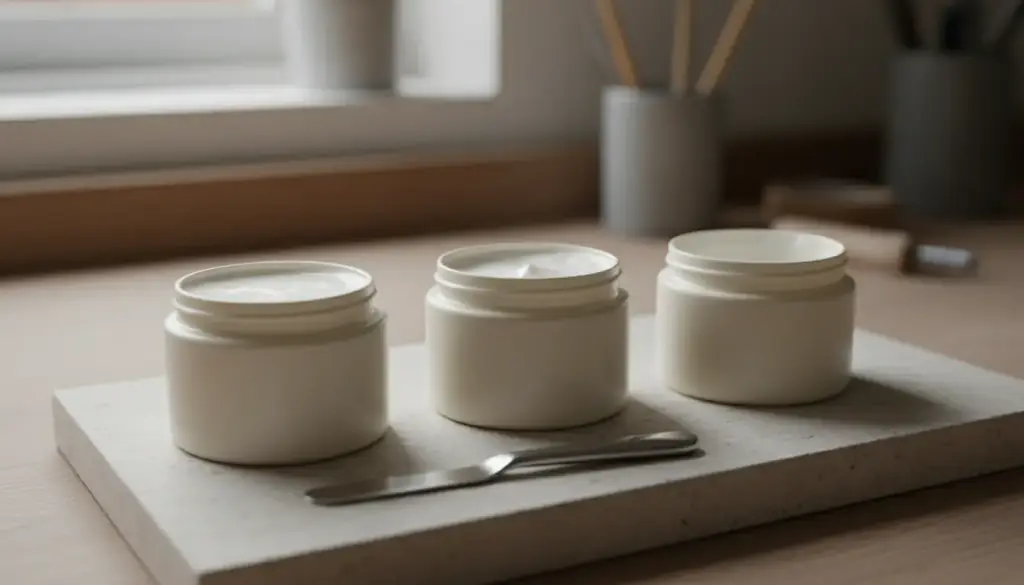
If you've gone looking for a scent you bought a few months ago from Own It and found it's not there anymore, that's not a stocking mistake and it's not being discontinued out of spite. It's what small batch actually means once you follow it through to its logical end, and it's worth understanding rather than resenting.
What 'made to order, a few dozen at a time' means in practice
Small batch production is exactly what it sounds like: soap, candles and lotions poured in limited runs rather than manufactured continuously on a line. A large manufacturer can keep a scent in permanent rotation because they're producing thousands of units at a time, with enough volume that a single formula stays available indefinitely. A small batch maker pours a few dozen units of a given scent, sells through that run, and then makes a decision about what to pour next. There's no permanent inventory sitting in a warehouse behind it. What's in stock is close to what actually exists.
Why the shelf changes week to week
That production model means the range you see today is a snapshot, not a fixed catalogue. A scent that sold well might come back in the next batch. One that didn't might not. This isn't a flaw in how small batch works, it's the direct consequence of not overproducing: a maker working this way isn't sitting on excess stock of anything, which also means nothing sits on a shelf for months losing its scent before it sells.
Collections exist because rotation has to happen somehow
Own It organises its range into named collections, The Dapper Phantom's Lair, High Summer, Fall 26, and a Classic line of year-round staples, and that structure is really a way of managing rotation deliberately rather than randomly. A gothic, spice-and-amber collection like The Dapper Phantom's Lair suits a different season and a different mood than the citrus and floral scents in High Summer, and running them as distinct, time-boxed collections rather than one enormous permanent catalogue is what makes small batch production manageable at all. New drops inside a collection like The Dapper Phantom's Lair aren't relaunches of an old product, they're genuinely new pours.
Small batches also mean small variation, and that's normal
There's a second, quieter consequence of pouring in small runs that's worth knowing before you compare two bars from the same scent side by side: handmade batches are not machine-identical. When a fragrance oil is hand-measured and hand-stirred into a pot rather than metered by a production line, small differences in exactly how long it's mixed, how warm the room is, or how evenly a fragrance disperses through the base can shift a bar's colour or scent strength slightly from one pour to the next. This is completely ordinary in small batch soap and candle making, and it's a direct trade-off against the alternative: a formula locked down so tightly that every unit is chemically identical, which is easier to achieve at volume and harder to achieve by hand. A bar that smells very slightly warmer or lighter than the last one you bought in the same scent hasn't gone wrong, it's evidence the batch was actually poured by hand rather than run through a machine calibrated to erase that kind of variation altogether.
The honest trade-off
There's no getting around the downside here: if you love a scent, there's a real chance it won't be there next time you look. That's the cost of buying from a maker who pours in small runs instead of manufacturing continuously. What you get in exchange is a product made in smaller, more attentive batches rather than a formula scaled to run unattended for months at a time, and a range that actually turns over instead of sitting stagnant. Neither side of that trade-off is automatically the right one, it depends what you're shopping for.
What to actually do about it
- If you find a scent you love, buy more than one while it's in stock rather than assuming it'll still be there next month
- Check the collection it belongs to, a seasonal line is more likely to be time-limited than a Classic staple
- If a favourite has sold out, ask directly whether a restock is planned rather than assuming the answer is no
- Follow new collection drops as they're announced rather than checking back at random
None of this is an apology for how small batch works, and it shouldn't need to be one. It's a straightforward description of what you're actually buying into: fewer units, more attention per batch, and a range that moves rather than sits still. If that means chasing a favourite scent occasionally, that's the honest cost of the thing being genuinely small batch in the first place.
Own It Soap Company, (469) 209-5184
Call (469) 209-5184More articles
How Long Should a Handmade Soap Bar Actually Last?
The fats in a bar decide how hard it starts out, but a wet dish decides how fast it ends.
Top, Heart and Base: How to Actually Read a Scent Description
The first ten seconds out of the bottle are not the whole story, and knowing the difference stops you buying blind.